

test
Content Header
Maintenance Image

Basic Tire Maintenance

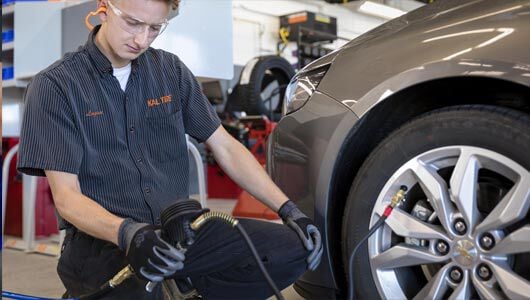
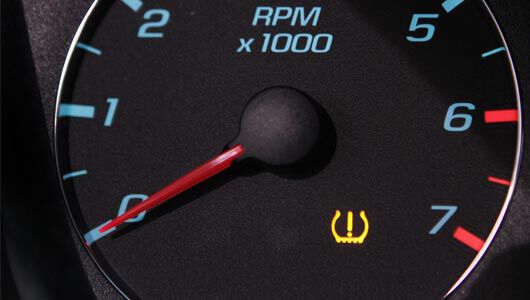
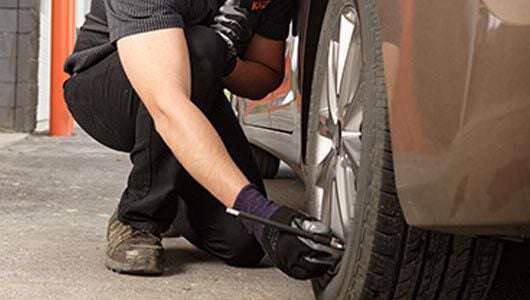
Maintain proper air pressure. The most common way of damaging tires is improper inflation. Use the inflation pressure guide as recommended by the vehicle manufacturer. You can find this information in your owner's manual, on your vehicle's door jamb or on the inside of the glovebox door. If you have changed size or load index, ask for what your new air pressure should be. Vehicles now come equipped with Tire Pressure Monitoring Systems or TPMS.

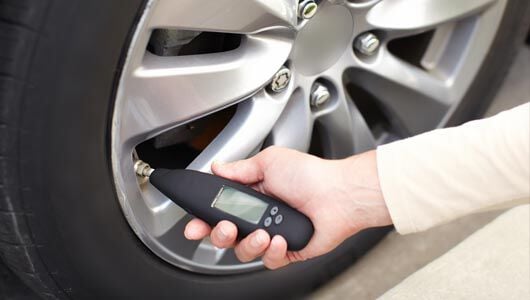
Check inflation at least once a month and before traveling using an accurate tire pressure gauge. It's best to check your tires when they are cold and make sure to check your spare tire while you're at it.

Balance your tires. Tires that aren't balanced properly wear out more quickly and cause a vibration in the vehicle. This leads to driver fatigue, premature or uneven tire wear and damage to your vehicle's suspension. Tires should be balanced when they are first mounted on wheels, or when they are remounted and, at the first sign of vibration.

Rotate your tires every 8,000 - 10,000 km. Each tire supports different amounts of weight, and your driving patterns will usually wear out one tire faster than the others. To ensure even wear on your tires, rotate your tires regularly.

Maintain proper alignment. Tires wear unevenly if the vehicle's suspension system is out of alignment. If you notice uneven front or rear tire wear, or changes to the vehicle's handling such as pulling to one side, have your alignment checked.

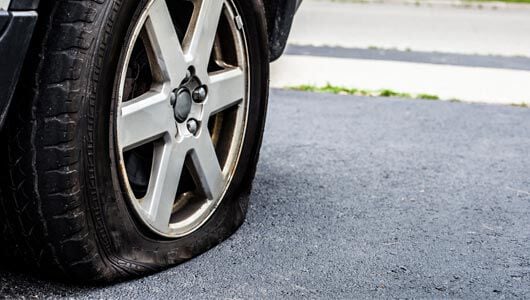
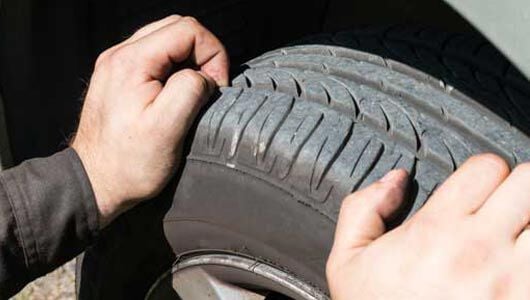
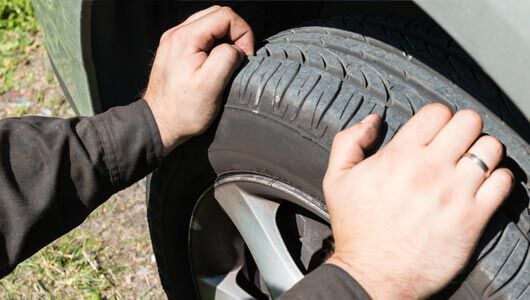
Check frequently for damage. To prevent flats and blowouts, make a habit of inspecting your tires for cracks, knots, bulges or penetrations. If you spot an abnormality, the tire should be removed and inspected by an expert.

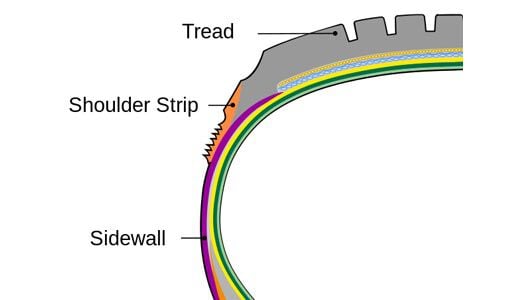
Fix flats. Most punctures, nail holes or cuts up to 1/4 inch that are confined to the tread area can be repaired by a trained personnel. Avoid on-the-wheel repairs as they aren't reliable and can cause further damage to the tire. Don't try to repair tires with tread punctures larger than 1/4 inch in diameter or any sidewall puncture. Make sure your spare is ready and properly inflated.

Clean sidewalls only with a mild soap solution. Other materials may degrade rubber and remove built in ozone resistance.

Vehicles now come equipped with Tire Pressure Monitoring Systems.